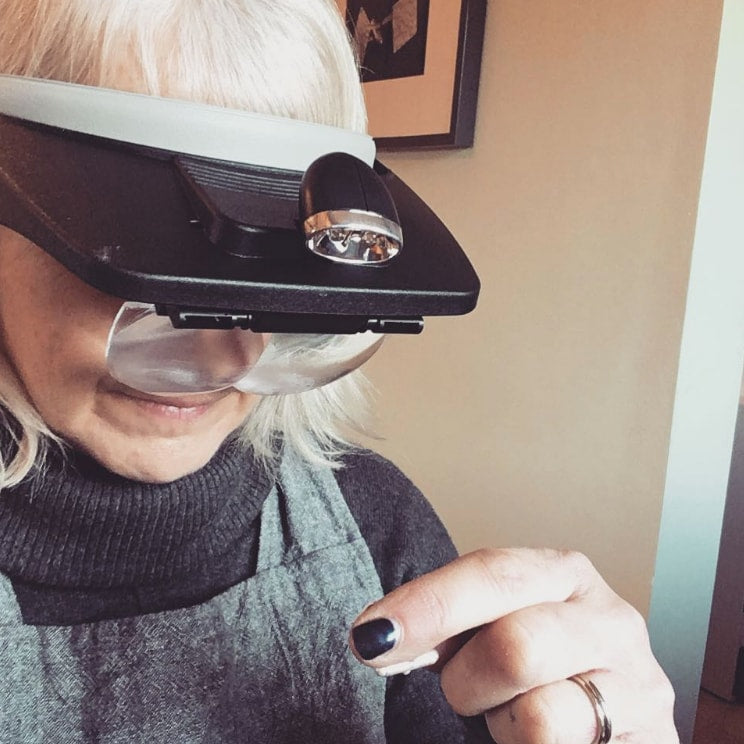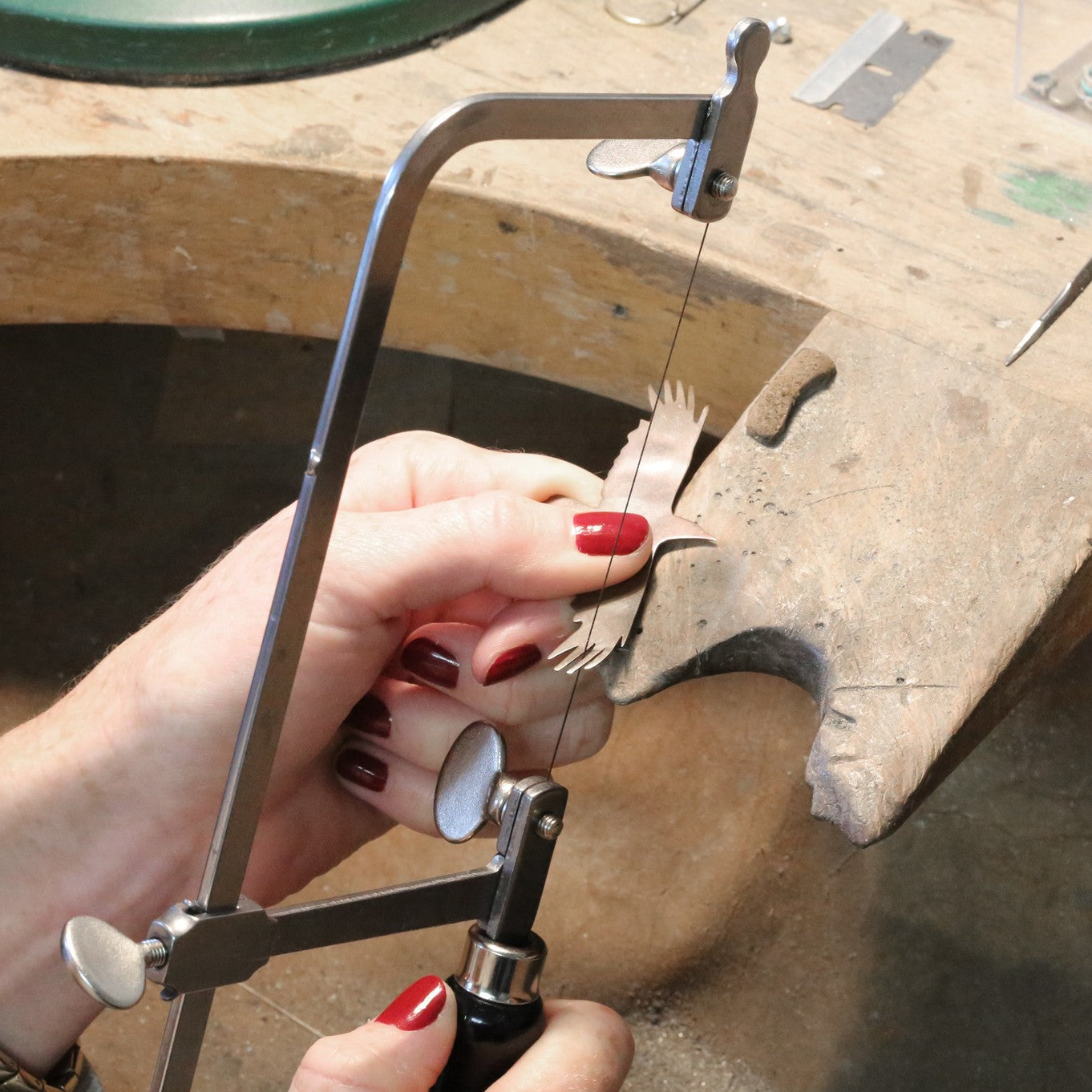
Hi, my name is Marena and I am the creator and crafter of Fabled Silver.
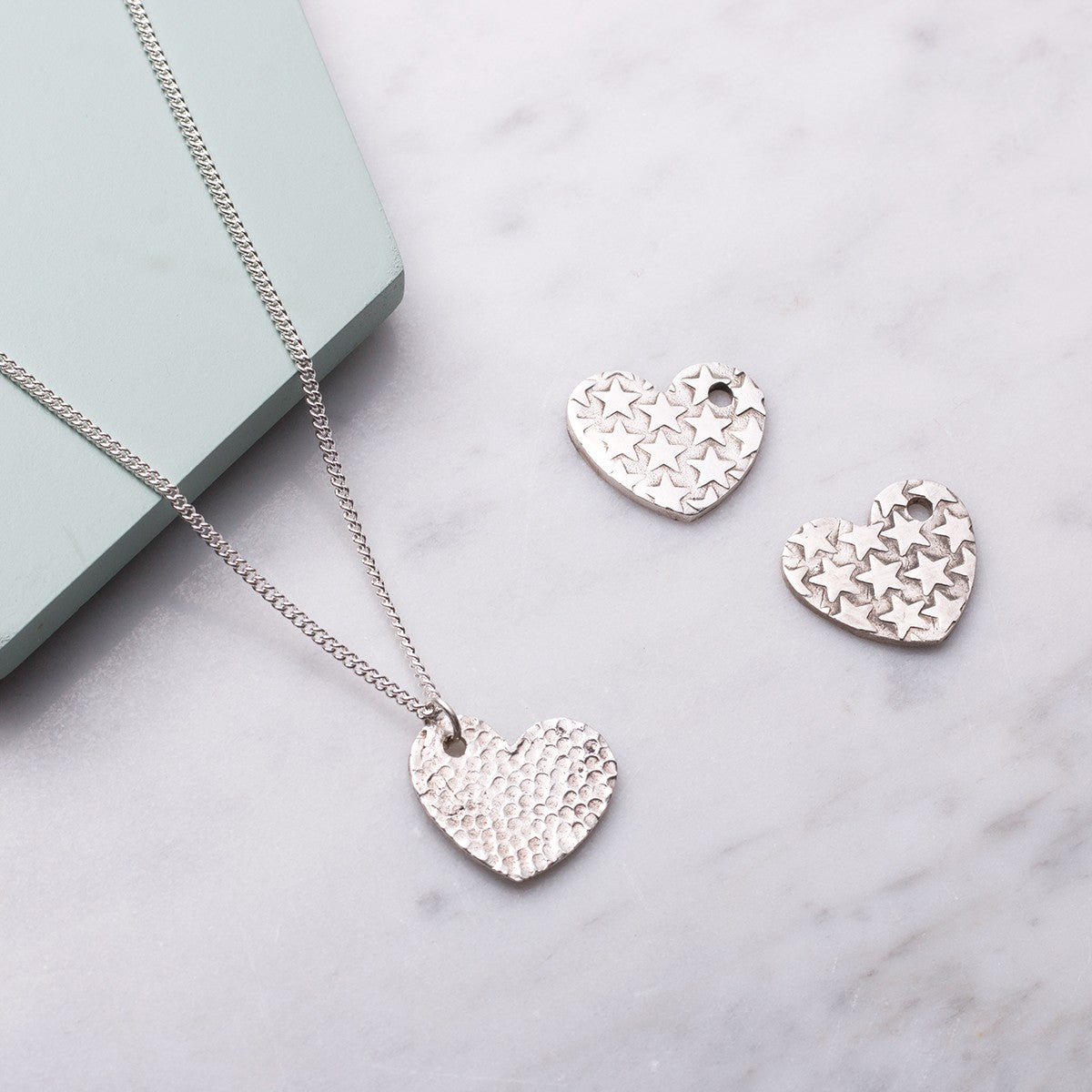
I first learned about patina and liver of sulphur, further referred to as LOS, on a Silver Diploma Course at London Jewellery School. Ever since then, I have not been able to exclude this technique from my jewellery making, as applying liver of sulphur to my jewellery pieces creates such an amazing contrast. It perfectly accentuates the deeper parts of the surface and is wonderfully eye-catching, especially when combined with colourful gemstones.

I bought the trial sized liver of sulphur patina solution from Kernowcraft to try it out at home after finishing my diploma course.
I love that this formulation is non-toxic. Finding and holding onto different environmentally friendly alternatives in my jewellery making is extremely important to me. Just like using recycled silver, for example.
Products & Supplies Mentioned in this Guide
- Liver of sulphur solution
- Plastic tweezers
- Torch
- Jewellery third hand
- Dremel 4000 Multi Tool
- Polishing cloths and supplies
- Renaissance Wax
- Midas Lacquer
What Exactly Is Liver Of Sulphur?
It is a chemical compound containing potassium sulphide and is used in metalworking to create antique-looking patinas on silver, copper, bronze, metal clays and, after a little surface preparation work, on brass and gold. It’s available in both liquid and solid form. It is bright yellow when diluted and has a strong smell that resembles rotten eggs.
You can create many colours with liver of sulphur. However, in this tutorial, we will concentrate on achieving the darkest patina by oxidising the deep parts and polishing the raised parts of the metal texture. If you wish to try out a liver of sulphur patina with a rainbow effect, there is more advice here: How To Create Patina With Liver Of Sulphur.
I will show you two techniques, one of which will require you to fully immerse your jewellery piece into a hot, diluted liver of sulphur solution. The other will explain how to apply liver of sulphur with a brush. There are many ways to use liver of sulphur and this tutorial only shows my personal preference and techniques that seem to work best for me.
The main thing though: safety first. Ensure you’re always careful and suited up before starting this process.
Good luck and enjoy experimenting!
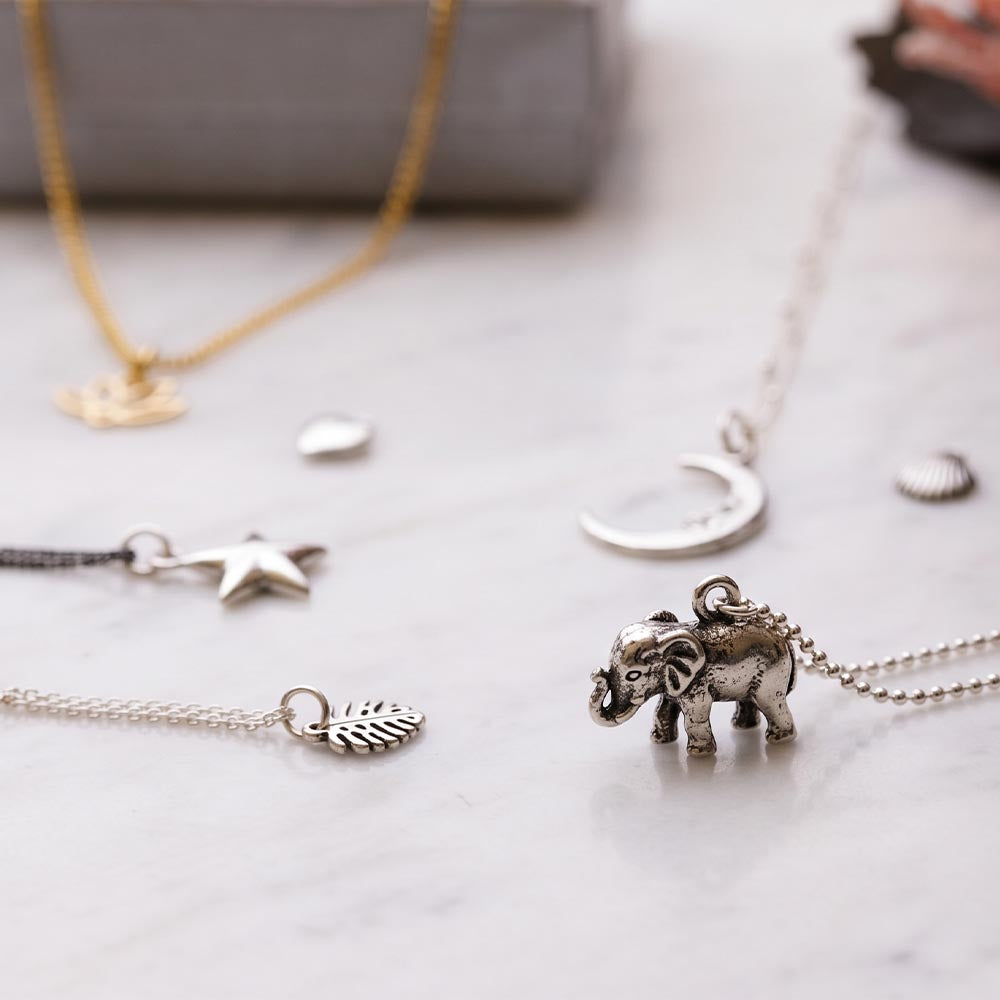
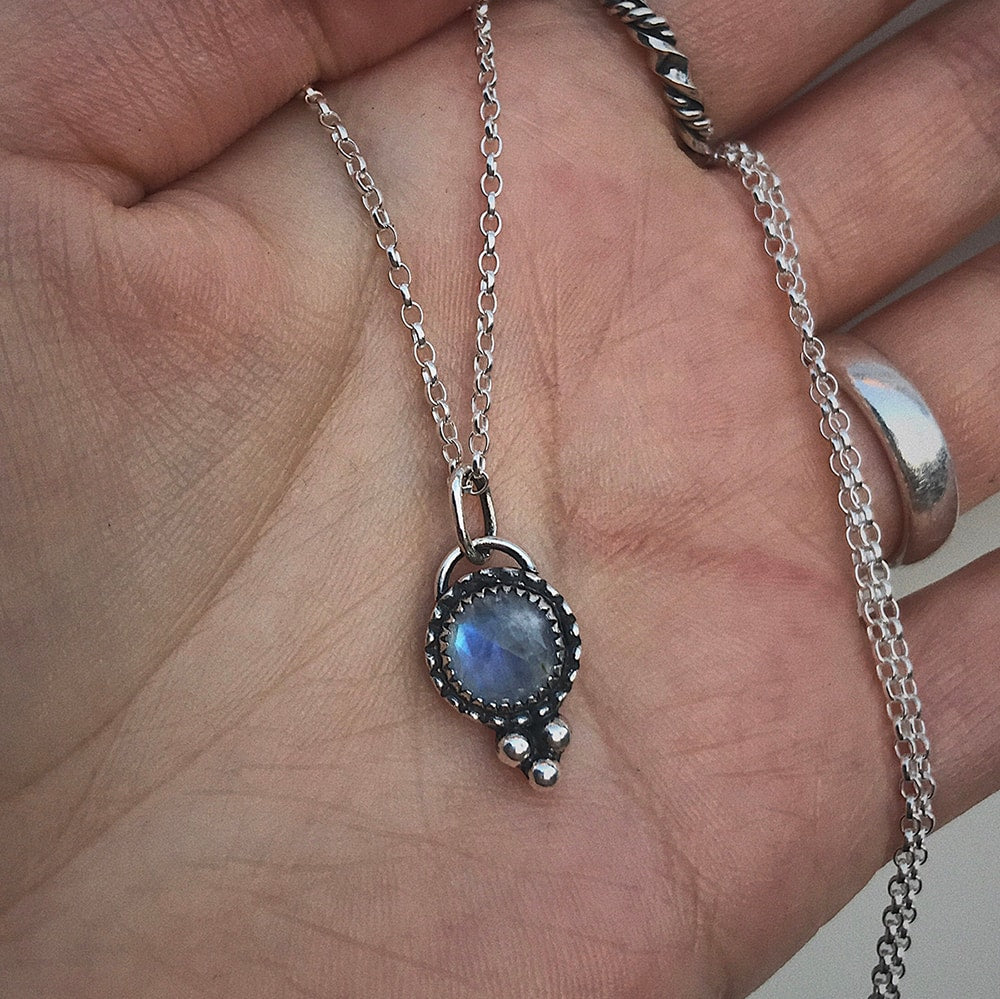
Examples Of Marena's Beautiful Jewellery Designs Using Liver Of Sulphur

Supplies You Need

Safety Equipment
- Safety goggles - these are very important, as liver of sulphur solution can irritate your eyes
- Work apron - liver of sulphur leaves bright yellow stains when it comes into contact with fabric
- Respirator - prolonged exposure to liver of sulphur smell can cause headaches and dizziness
- Disposable gloves - to protect your skin from smells and protect your eyes if you accidentally touch your face

Tools & Supplies
- Liver of sulphur solution
- A small glass jar with approx. 250ml hot, not boiling, water
- A small glass or plastic container of cold water, approx. 250ml
- Baking soda
- Plastic tweezers
- Brush, optional depending on the technique used
- Torch or hair dryer, optional depending on the technique used
- Jewellery third hand, optional depending on the technique used

Silver Jewellery Of Your Choice
I have chosen to create a patina on one of my moonstone pendants and a ring I made previously with a clean finish but later realised it needed patina to bring out its texture.
Method 1: The Hot Water Method With Liver Of Sulphur
This method is perfect for pieces that need to be covered with patina all over and have no gemstones.

- Apply 10 drops of liver of sulphur into the hot water jar.
- Mix the liver of sulphur into the water using plastic tweezers.
- Carefully drop your piece into the mixture and leave for a few minutes.
- While your metal piece is oxidising, put about a teaspoon’s worth of baking soda into the jar with cold water.
- Stir well, using either the teaspoon or plastic tweezers until the baking soda has dissolved.
- When a few minutes have passed and you feel satisfied with the colour of your piece, transfer it from the liver of sulphur mixture into the baking soda solution.

- Swirl the piece around for a few seconds or leave it in for a minute. The baking soda reacts with the liver of sulphur and stops it from developing further.
- Take the piece out of the baking soda mixture, rinse with soapy water and leave on a towel to dry.
- Once the piece is dry, you can polish it to your desired standard. I always use my Dremel 4000 Multi Tool with LUXI bars and have found them to do the job perfectly. However, a polishing cloth will suffice. Just ensure you don’t use anything abrasive, as it will make the finish look dull.
- Once you have finished with the newly mixed liver of sulphur solution, you can close the jar with a lid, clearly mark it and leave it in a cool, dark place. It will remain active for a few days, although it will become weaker. You will still be able to use it as long as it’s bright yellow, you’ll just need to heat up the metal piece before putting it into the solution next time.
Method 2: Applying Liver Of Sulphur With A Brush
This method is great for applying patina to certain spots of your jewellery or if you have already set a stone into your work and have later decided to add patina.

- You will need a brush and the liver of sulphur solution to start with.
- Apply a drop of the solution onto the brush.
- Carefully apply the solution onto your piece with a brush, avoiding any set stones.
- Ensure that you have covered all the desired parts of the piece and have applied the solution into all the crevices of the texture, as any missed areas will be very noticeable once it’s finished.
- Once you’re happy with the liver of sulphur coverage, you will need to heat the piece slightly to accelerate the chemical process. Be very careful with this step, as too much heat can melt metal or cause breaks and discoloration in the stone. To protect your hands, place the jewellery into a third hand and use either a hand torch or a hair dryer on the lowest setting. You must only warm up the solution, not boil it.
- After heating the jewellery piece, leave it to cool by itself, still in the third hand. While you’re waiting for it to cool, prepare the neutralising solution by mixing about a teaspoon’s worth of baking soda into the jar with cold water.

- Stir well, using either the teaspoon or plastic tweezers until the baking soda has dissolved.
- When the jewellery piece is cool to touch, take it out of the third hand and place it into the baking soda solution.
- Swirl the piece around for a few seconds or leave it in for a minute. The baking soda reacts with the liver of sulphur and stops it from developing further.
- Take the piece out of the baking soda mixture, rinse with soapy water and leave on a towel to dry.
- Once the piece is dry, polish it to your desired standard. A polishing cloth will work, but ensure you don’t use anything abrasive, as it will make the finish look dull.
- Enjoy the finished result.
Top Tips For Working With Liver Of Sulphur
- Ensure that your metal piece is completely cleaned, polished and free from grease and lacquers. It should look finished before you oxidise it.
- The temperature of the liver of sulphur and the piece of metal will affect how fast the colours of the patina develop. The hotter it is, the more quickly the colours will move from shade to shade. They progress roughly as follows: gold, pink, magenta, blue, purple, bronze, grey and black.
- Liver of sulphur is great for enhancing the colour of semi-precious gemstone cabochons, such as moonstone and labradorite, as some stones might not be as striking on their own. The idea is that the bezel base is oxidised to make it black, so that when the stone is set, it appears a little darker.
- If you intend to oxidise a piece with a gemstone, it’s best to set the stone afterwards. You can still oxidise pieces with stones already set in, however, I would recommend carefully using the brush method. Never apply liver of sulphur to gemstones, as they will get damaged.
- It’s best to oxidise many pieces of jewellery together to save time and make the most of your liver of sulphur solution, as it quickly loses its potency with exposure to air and moisture.
- If a prepared batch of liver of sulphur turns milky or clear, it will most likely be ineffective. It can be safely disposed of down the drain. Ensure that you flush the pipes with water afterwards.
- Liver of sulphur is a patina, and in general, patinas are not permanent. If not treated or finished, the effect will wear off over time. This can be helped by applying some Renaissance Wax or Midas Lacquer onto your piece.
- Ensure that all your brushes, containers and similar items used with liver of sulphur are exclusive for that purpose only, as the remaining liver of sulphur residue will colour metals.
- If you wish to remove the patina, you can either heat up your piece, unless it has gemstones, use a store-bought tarnish remover or try the baking soda and aluminium foil method.
Follow Fabled Silver
Also in this section:
- Guide To Sanding & Polishing For Jewellery Making
- A Guide To Texturing Metals For Jewellery Making
- Top Tools For Making Textures On Metal
- VIDEO: How To Create Patina With Liver Of Sulphur
- 2 Ways To Apply Liver Of Sulphur
- How To Use Renaissance Wax To Prevent Tarnished Jewellery
Have A Question?
If you have any questions, feel free to get in touch with our friendly team who will be more than happy to give you advice over email or on the phone.
You can learn more and find inspiration by visiting our Jewellery Making Tutorials, Jewellery Making Kits and YouTube Channel. Don't forget to follow us on social media and tag us in your designs on Instagram and Facebook, we would love to see!